400 Americans Confessed the Holiday Traditions They're Secretly Just Surviving—And the List Is Gloriously Unhinged
Somewhere between Thanksgiving and New Year's, something happens to otherwise reasonable adults. They string lights on things that don't need lights. They wear itchy sweaters on purpose. They hum along to songs they genuinely cannot stand while maintaining a facial expression that says this is the most wonderful time of the year and not I have been awake since 4 AM and someone already cried over the gravy.
We asked 400 Americans to confess—anonymously, because some truths require witness protection—which holiday traditions they are actively, enthusiastically faking their way through. The responses were so relatable, so specific, and so beautifully unhinged that we felt morally obligated to share them.
Welcome to the holiday season. Nobody is having as much fun as they look like they're having.
The Ugly Sweater Industrial Complex
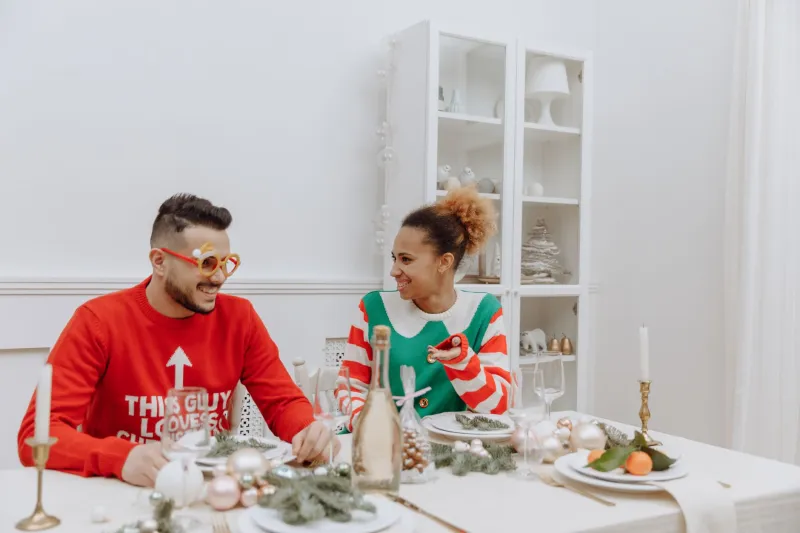
Thirty-one percent of respondents listed ugly sweater parties as their personal holiday purgatory. And look, we get the appeal in theory. Wear something ridiculous, drink something warm, laugh at each other. Fine. Cute. But somewhere along the way, the ugly sweater party became a competitive sport with winners and prizes and people who showed up with LED lights sewn into their knitwear and a practiced speech about where they sourced it.
"I spent forty-five minutes pretending to care whose sweater was uglier," wrote one respondent from Ohio. "I have a mortgage. I have a child. I have not slept properly since 2019. And yet here I am, judging a sweater."
Another simply wrote: "I hate all of them. I go every year."
This is the holiday spirit. This is what it looks like.
Caroling: A Crime Nobody Reports
Twenty-two percent of respondents mentioned caroling—either being dragged into it or being forced to receive it at their front door with an expression of delight while internally begging for it to end.
Caroling, as a concept, is sweet. A group of people, singing together, spreading warmth through a neighborhood. Beautiful. The reality, multiple respondents noted, is standing in someone's driveway in 28-degree weather, half-remembering the words to O Holy Night, while a neighbor you've never spoken to watches from their doorway with an expression that is technically a smile.
"I don't know why I keep going," admitted one respondent from Minnesota. "I can't sing. My sister can't sing. Our dad absolutely cannot sing. We do this every year and the neighbors have started turning their lights off when they see us coming."
The dedication. The commitment. The complete absence of shame. Truly, this is the American holiday experience.
The Relative Conversation Gauntlet
This one dominated the survey. Forty-four percent—the single largest category—cited specific conversations with specific relatives as the holiday tradition they are most aggressively faking enthusiasm for.
The subcategories here were remarkably consistent:
- The Career Check-In: "So what are you doing now?" asked with an energy that suggests your current answer will be graded.
- The Relationship Status Debrief: Delivered with the investigative rigor of a congressional hearing.
- The Political Opinion That Wasn't Asked For: Arrives between the salad course and the main, uninvited, like a ghost that only appears at holidays.
- The Story You Have Heard Before: Told with the same energy as the first time, every time, for fifteen years.
"My uncle has told the same story about a road trip he took in 1987 at every single Christmas dinner since I was eight years old," wrote one respondent from Georgia. "I now know this story better than he does. I have caught errors. I do not correct them. I just smile."
That smile. That practiced, loving, completely hollow smile. It is the true symbol of the holiday season.
White Elephant Exchanges: Chaos Cosplaying as Fun
Seventeen percent of respondents named White Elephant gift exchanges as their most endured tradition, and honestly, the passion behind these responses was something to behold.
For the uninitiated: White Elephant is a gift exchange game where participants bring a wrapped mystery item, and then spend the next forty minutes stealing gifts from each other while pretending this is fun and not a mild social experiment in human greed and passive aggression.
"Someone brought a cheese board. Someone else stole it three times," wrote one respondent from Texas. "My aunt cried. Not about the cheese board. But also maybe about the cheese board."
The genius of White Elephant is that it takes the already complicated social ecosystem of a family gathering and adds stakes. Now there are winners. Now there are losers. Now your cousin is holding a stolen Bluetooth speaker and making eye contact with you across the room like a chess player who just made a move.
"I smile the whole time," one respondent from Illinois noted. "My eye has been twitching since 2021."
The Forced Group Photo Session
Fourteen percent of respondents named the annual family photo as a tradition they endure with the energy of someone completing a mandatory training.
The process, as described across dozens of responses, follows a remarkably consistent arc: someone announces photos, everyone groans, someone else insists, positions are negotiated for longer than seems reasonable, the camera person cannot work the timer, someone blinks, someone is making a face, someone's arm looks weird, the whole thing is done again, and then again, and then once more for the one aunt who "just wants to try her phone," and then it is over and everyone looks at the result and says "great" with the specific flatness of people who have accepted their fate.
"We have done this for twenty-two years," wrote one respondent from North Carolina. "In not one single photo does anyone look genuinely happy. We frame them anyway."
Why We Keep Showing Up
Here's the thing—and we mean this sincerely, underneath all the sweater chaos and stolen cheese boards—almost nobody said they wanted to stop.
The same people who described caroling as a form of mild suffering also described it as something they'd never skip. The people surviving the relative conversation gauntlet showed up again last year and will show up again this year. The White Elephant veterans are already thinking about what to bring.
Because somewhere in the middle of all that performed enthusiasm and suppressed sighing and very specific eye-twitching, something real is happening. People are in the same room. Telling the same stories. Wearing the same ridiculous sweaters. Doing the same things they didn't fully want to do, together.
It's not magic, exactly. It's weirder than that. It's the specific human decision to keep showing up for the things that are simultaneously kind of awful and completely irreplaceable.
Also, there's usually good food. That part everyone agreed on.
WinkCoo surveyed 400 Americans about their holiday traditions. Responses were collected anonymously. The cheese board conflict has not been resolved.